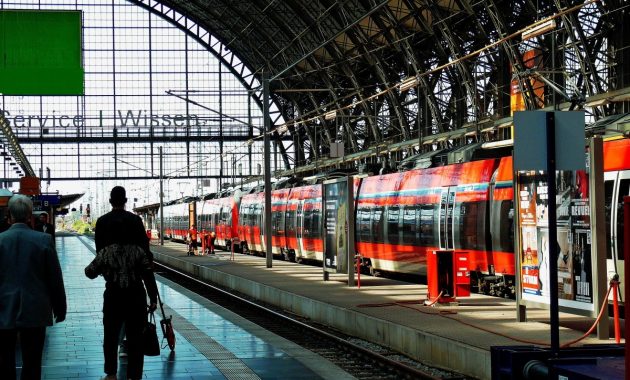
Франкфурт є звичайним пунктом в’їзду до Німеччини через його великий міжнародний аеропорт. Звідти відвідувачі роз’їжджаються по всій країні та до великої Європи, але, сподіваюся, не раніше, ніж виявлять, що може запропонувати Франкфурт.
Фінансовий центр Німеччини піднявся з чисто ділової репутації до найкращого німецького міста для відвідування. Він має численні пам’ятки: від музеїв світового класу до таких подій, як знаменитий Книжковий ярмарок, до еклектичного харчування та сцени апфельвайну (німецького яблучного сидру).
Громадський транспорт дозволяє відвідувачам легко пересуватися по всьому місту, він легший, дешевший і часто швидший, ніж автомобіль. Система складається з U-Bahn (метро), S-Bahn (приміських поїздів), трамваїв і автобусів. Ним керують Транспортна асоціація Рейн-Майн (RMV) і Verkehrsgesellschaft Frankfurt (VGF), одна з найбільших мереж громадського транспорту Німеччини. Система добре організована, безпечна та досить пунктуальна, але потрібна певна практика, щоб почуватися комфортно. Скористайтеся нашим повним путівником по громадському транспорту Франкфурта.
Як їздити на U-Bahn у Франкфурті
U-Bahn (метро) працює частково під землею і часто працює разом із трамвайною системою. Потяги ходять кожні 2-5 хвилин у центрі міста. Частота сповільнюється до 10-20 хвилин після 20:00, а нічні автобуси починають з 1:00 до 4:00.
Є дев’ять комбінованих ліній U-Bahn/трамваю та майже 90 станцій:
- U1–U3: ці лінії пролягають від південного залізничного вокзалу на північ від міста одним маршрутом, потім розділяються на Nordweststadt (U1; червоний), Bad Homburg-Gonzenheim (U2; світло-зелений) і Oberursel (U3; темно-фіолетовий). ).
- U4 (рожевий): курсує від західного Бокенхаймер-Варте через Hauptbahnhof (головний залізничний вокзал) до східного Енкхайма.
- U5 (темно-зелений): це комбінована лінія трамваю та метро від північного Преунгесхайма до центру міста. Він має спільні станції метро з U4.
- U6 (синій): курсує від Херштрассе на заході до Остбанхоф (Східний вокзал) на сході.
- U7 (помаранчевий): пролягає зі сходу в Гаузені на заході до Берген-Енкхайма на північному сході.
- U8 (світло-фіолетовий): курсує від північного Рідберга до Південного Франкфурта. Він поділяє треки з U1-3.
- U9 (жовтий) : починається з півночі в Nieder-Eschbach до Ginnheim у Nordweststat на спільній лінії U2, а також на спільній лінії U8. Це єдина лінія, яка не проходить через центр міста.
Використовуйте веб-сайт RMV, щоб спланувати свою поїздку, знайти розклад ( fahrplan ) і інформацію про відправлення/прибуття в реальному часі.
Як їздити S-Bahn у Франкфурті
Міська S-Bahn або Stadtbahn (міська електричка) — це місцева залізниця, яка пролягає в основному над землею від центру міста до навколишніх передмість і міст. Територія навколо Франкфурта густонаселена, і S-Bahn пропонує легкий доступ до околиць міста, а також до навколишніх міст, таких як Майнц, Вісбаден і Ханау.
S-Bahn працює кожні три хвилини в години пік і кожні 15-30 хвилин вночі або на околицях. Обслуговування починається о 4:00 на деяких лініях, з повним обслуговуванням з 6:00 до 20:00 на всіх лініях. Остання S-Bahn відправляється з Франкфурта о 1:20 ночі. Лінії S8 і S9 працюють цілодобово. Квитки пропонують доступ до S-Bahn, а також решти громадського транспорту Франкфурта.
Станції S-Bahn можна впізнати за зелено-білим символом «S». Увійдіть на платформу та, отримавши квиток, поставте на ньому штамп і сідайте на S-Bahn. Карти доступні на платформі, а електронні табло надають інформацію про наступне прибуття.
S-Bahn у Франкфурті охоплює 9 ліній і 112 станцій.
- S1: Вісбаден – Франкфурт-Хехст – Франкфурт – Міський тунель – Оффенбах Ост – Редермарк-Обер Роден
- S2: Niedernhausen – Frankfurt-Höchst – Frankfurt – Citytunnel – Offenbach Ost – Dietzenbach
- S3: Бад-Зоден – Франкфурт-Захід – Франкфурт – Міський тунель – Ланген – Дармштадт
- S4: Kronberg – Frankfurt-West – Frankfurt – Citytunnel – Langen (– Darmstadt)
- S5: Friedrichsdorf – Frankfurt-West – Frankfurt – Citytunnel – Frankfurt-Süd
- S6: Friedberg – Frankfurt-West – Frankfurt – Citytunnel – Frankfurt-Süd
- S7: Riedstadt-Goddelau – Groß-Gerau Dornberg – Frankfurt Hauptbahnhof
- S8: Wiesbaden – Mainz – Frankfurt Airport – Frankfurt – Citytunnel – Offenbach Ost – Hanau
- S9: Wiesbaden – Mainz-Kastel – Frankfurt Airport – Frankfurt – Citytunnel – Offenbach Ost – Hanau
For a complete map for the S-Bahn routes, visit the RMV website.
How to Ride Frankfurt’s Buses
Buses fill in some of the gaps in Frankfurt’s public transport system. All major routes are served by rail-based modes of transportation, but stops are closer together and buses can be a good way to orient yourself with the city. Where buses are most useful is in the north between S-Bahn stations and at night.
Bus stops are marked by a circular sign with a green “H.” They often have a small shelter and electronic sign updating arrivals, as well as posted regular schedules and routes. Tickets can be purchased from machines at S- or U-Bahns or directly from bus drivers. If you have a ticket that is not time-stamped, stamp it with the machine near the entrance of the bus.
Night Buses in Frankfurt
Between the hours of 1 a.m. and 4 a.m., U-Bahns and S-Bahns have reduced or paused service and night buses replace those lines as they run 24 hours a day. Nachtbus lines have numbers beginning with “N.” Tickets cost the same as daytime transport.
Tickets on Frankfurt’s Public Transport
Regular tickets (einzelfahrt) cost 2.75 euros (1.55 euros discounted) and allows for travel on all forms of transport. Zone 50 includes most of Frankfurt, excluding the airport.
Tickets are time-stamped and valid for two hours of travel beginning immediately. It allows for unlimited transfers in one direction. For example, you can travel around the city on a single ticket for 120 minutes from the time the ticket was stamped, but you can’t go in one direction then come back the same way. Children under 6 do not need tickets and reduced fare is available for children 6 to 14.
There are also other ticket options:
- All-day ticket (Tageskarte): This costs just a little more than two single journeys at peak times. The fare is generally 5.35 euros (3 euros discounted). Tickets are valid from time of purchase to end of operations that day. Note that day tickets purchased at price level 3 valid for use in Frankfurt (fare zone 50) are not valid for travel to Frankfurt Airport.
- Kurzstrecke: A short-trip ticket valid for journeys up to 1.2 miles (2 kilometers) away. It costs 1.85 euros.
- Gruppentageskarte (all-day group ticket): This day ticket is valid for up to five people and costs 15.80 euros (it excludes airport transfers).
- Frankfurt Card: For 23 euros, up to five visitors can utilize all the transport options for 24 hours plus travel from Frankfurt Airport or Frankfurt HBF, and get discounts on main attractions.
- Wochenkarte (weekly pass): Valid for seven consecutive days.
Tickets can be purchased via touch-screen ticket machines (fahrkartenautomaten) in S-Bahn and tram stations, RMV outlets, or on the RMV app. The app can be used in English. If traveling inside Frankfurt, the red button “Stadtgebiet Frankfurt” purchases a basic ticket.
Machines have an English language option (as well as several others). Machines accept euro coins and notes (up to 10 or 20 euros) and chip-and-PIN credit cards.
You must be in possession of a valid ticket on public transport and it’s largely on the honor system. However, you need to show a ticket when entering buses and when ticket controllers—both uniformed and plain clothes—ask to see your ticket by saying “Fahrscheine, bitte” (Ticket, please). If caught without a ticket, you are subject to a 60 euro fine and controllers are infamously unsympathetic.
Accessibility on Berlin’s Public Transportation
Entrance to the U-Bahn and S-Bahn is barrier-free and escalators and elevators service most stations – but not all. At www.traffiq.de there is a list of all stops and stations that are barrier-free.
On trams and buses, look for doors marked with wheelchairs or strollers for the best cars for wheeled travelers. Frankfurt’s tourism board offers information for barrier-free travel for visitors with disabilities.
Other Modes of Transport in Berlin
- Taxis: Taxis are available throughout the city at taxi stands, airport and train stations or by reserving ahead. Taxis are cream with a “TAXI” roof sign.
- Car Rentals: Renting a car is not necessary for travel within Frankfurt, but can be helpful for traveling around the country and exploring the world-famous Autobahn. Refer to our full guide on car rentals in Germany for more information.
- Trains: Deutsche Bahn transports millions of travelers in Germany and beyond every day. The earlier you purchase tickets, the cheaper they will be. Regional day tickets, weekend tickets, or day tickets for all of Germany are offered so check for discounts.
- Bikes: Biking is a good way to travel around Frankfurt. Second-hand bikes are usually inexpensive, although you should get a receipt as bike theft is rampant. If you only need a bike for a short period of time, use one of the many bike-sharing programs. Also note that bikes can be taken on Frankfurt’s metro system for free, but they may be refused during peak hours.
Tips for Getting Around Frankfurt
- Public transport vastly slows between the hours of 1 to 4 a.m. Note that some lines still run during these nighttime hours, particularly the Nachtbus.
- Though travelling by taxi in the city center is easy to do, there are times during major conventions (like the Frankfurt Book Fair) where finding a taxi can be near impossible.